The best screen time apps for iPhone in 2026
iPhone has one thing Android does not: a proper Screen Time API. That single fact explains every difference between the two platforms' apps.
By Ruslan Shchuchkin, who built PhoneStop · · Read this page as Markdown
Apple gives third-party apps a supported way to block apps and websites without ever seeing what is on your screen. That is why iPhone screen time apps are more capable and more private at the same time, and why the good ones are subscriptions, since the API is the moat and the polish is the product.
One disclosure up front: we make PhoneStop, which is Android only today. An iPhone version is coming soon. It is not on this list, because recommending an app you cannot install yet would be a waste of your time.
How we judged them
- Does it use the Screen Time API (private, supported) or Shortcuts automations (fragile, free)?
- How hard is the block to lift in the moment?
- Subscription or one-time?
- Is the free tier usable?
| App | Best for | Platforms | Price | Try it |
|---|---|---|---|---|
| Apple Screen Time | Free, and the place to start | iPhone, iPad, Mac (built in) | Free | vs PhoneStop |
| Jomo | The most capable third-party app | iPhone and iPad | Subscription, with a one-time lifetime option | vs PhoneStop |
| Opal | The most polished experience | iPhone and iPad (an Android build exists but trails the iOS app) | Free tier, subscription for the real features (around $100/year) | vs PhoneStop |
| one sec | Friction rather than blocking | iPhone, iPad, Android, browser extension | Free for one app; subscription to go further (around $50/year) | vs PhoneStop |
| ScreenZen | Free and good | iPhone, iPad, Android | Free, donation-supported | vs PhoneStop |
| Brick | Physical friction | iPhone and Android (needs recent OS versions) | $59 one-time for the puck; the app is free | vs PhoneStop |
The list
1. Apple Screen Time: Free, and the place to start
iPhone, iPad, Mac (built in) · Free
App limits, category limits, Downtime and a five-minute warning, built into iOS. Its famous flaw is the Ignore Limit button, but set a Screen Time passcode you do not know by heart and it becomes considerably stronger than its reputation.
Good: Free, deeply integrated, and category limits beat any manual app list.
Less good: One tap dismisses it unless you have set a passcode.
Read the full PhoneStop vs Apple Screen Time comparison
2. Jomo: The most capable third-party app
iPhone and iPad · Subscription, with a one-time lifetime option
The deepest iPhone tool in the category: sessions, categories, conditions, and your own stated intention shown back to you at the moment of the block.
Good: Enormously flexible, with a one-time purchase option.
Less good: Setup takes real time, and the full feature set is paid.
Read the full PhoneStop vs Jomo comparison
3. Opal: The most polished experience
iPhone and iPad (an Android build exists but trails the iOS app) · Free tier, subscription for the real features (around $100/year)
The best-known name here. Focus sessions, schedules, scores and a Deep Focus mode that is genuinely hard to lift. If you want something that feels finished, this is it.
Good: Excellent product design, and Deep Focus works.
Less good: The pricing is the most common complaint in the category.
Read the full PhoneStop vs Opal comparison
4. one sec: Friction rather than blocking
iPhone, iPad, Android, browser extension · Free for one app; subscription to go further (around $50/year)
A breath before the app opens, built on Shortcuts automations. Cheaper than the blockers, less absolute, and the mechanism with the best published evidence behind it.
Good: Gentle, effective, and works across iPhone, Android and the browser.
Less good: Shortcuts setup is fiddly and can break.
Read the full PhoneStop vs one sec comparison
5. ScreenZen: Free and good
iPhone, iPad, Android · Free, donation-supported
Donation-supported, no paid tier holding features back: a pause screen, an intention prompt and a cap on daily opens. The best free third-party option on iPhone.
Good: Free, with no upsell.
Less good: Per app, and softer than the paid blockers.
Read the full PhoneStop vs ScreenZen comparison
6. Brick: Physical friction
iPhone and Android (needs recent OS versions) · $59 one-time for the puck; the app is free
A $59 NFC puck that makes your chosen apps disappear until you tap the phone against it. The answer for people who have dismissed every software block they ever set.
Good: One-time cost and the strongest friction available.
Less good: Hardware to carry, or deliberately not carry.
Read the full PhoneStop vs Brick comparison
The verdict
Set a Screen Time passcode first: it is free and it fixes the one flaw people complain about. If you want more, ScreenZen is the free upgrade and Jomo or Opal are the paid ones, depending on whether you enjoy configuring things. On Android the landscape is completely different; see the Android guide.
Disclosure: we make PhoneStop, so treat our own entry with the scepticism it deserves. Everything else here is written from public information and hands-on use; prices and platforms were checked in September 2026 and change often, so check the vendor before you pay.
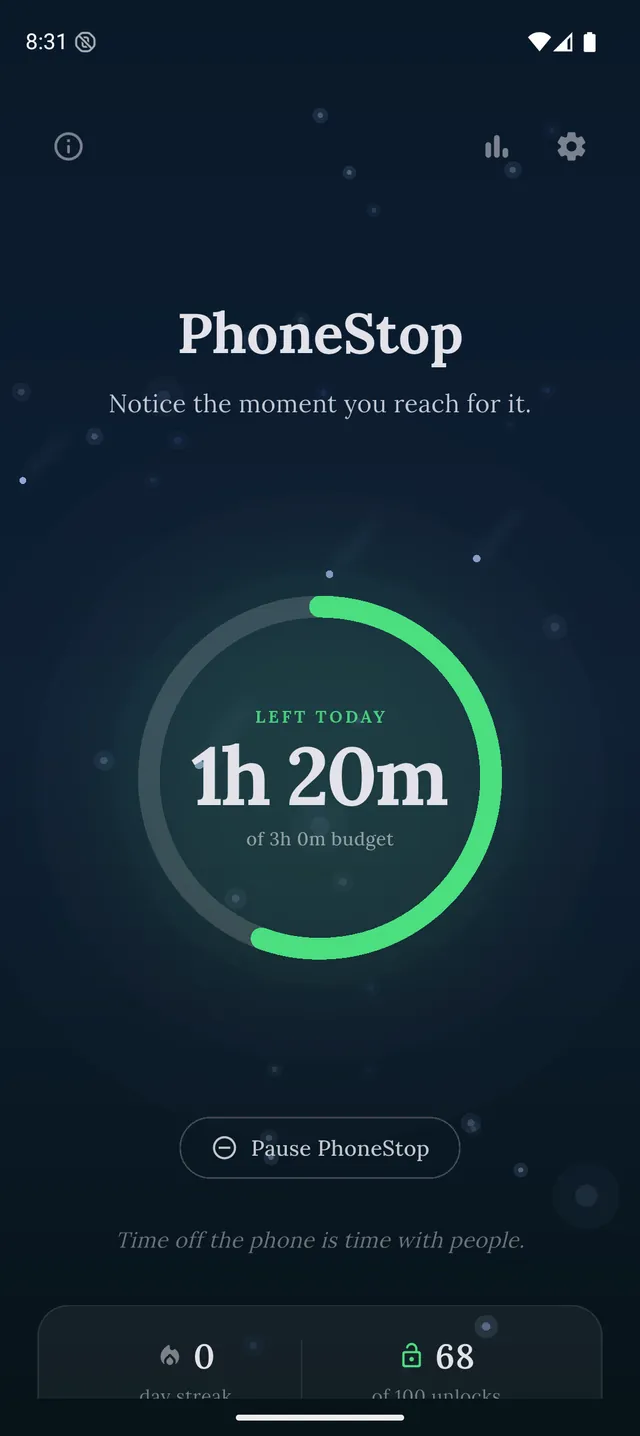
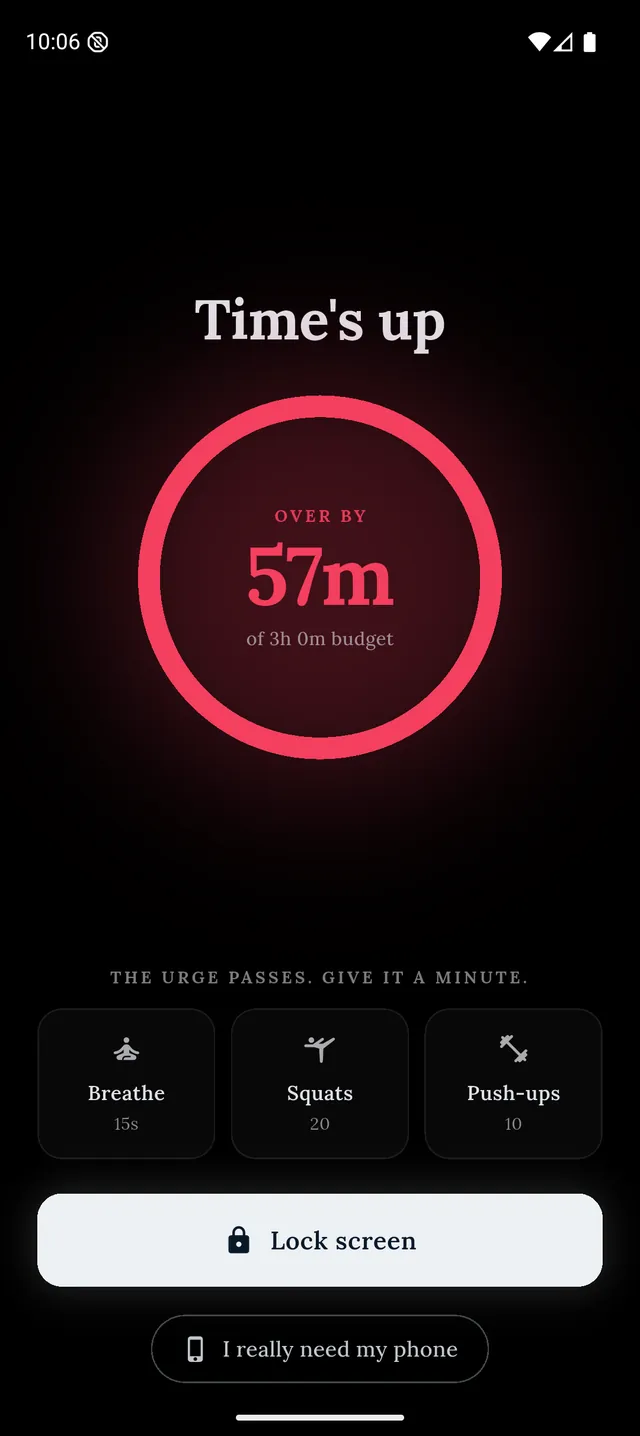
PhoneStop is a free Android app. Set a daily screen time budget, get warned before it runs out, and get stopped when it does.
Android. No account, no ads. Your screen time never leaves your phone. An iPhone version is coming soon.
Questions people ask
What is the best screen time app for iPhone?
For free, Apple's own Screen Time with a passcode you cannot remember, plus ScreenZen. For paid, Jomo if you want depth and Opal if you want polish.
Why are iPhone screen time apps better than Android ones?
Because Apple ships a Screen Time API that lets apps block things without reading your screen. Android has no equivalent, so Android apps use usage access, accessibility services or overlays instead.
Is PhoneStop available on iPhone?
Not today: it is Android only for now, and an iPhone version is coming soon. It will be built on Apple's Screen Time API, which is what the good iPhone apps on this list use.