Unpluq vs Brick
Both put your distracting apps behind something you have to physically tap. One asks for a yearly fee, the other for $59 once.
By Ruslan Shchuchkin, who built PhoneStop · · Read this page as Markdown
The short version
Choose Brick if you want to pay once and be done. A $59 puck, tap to lock, tap to unlock, no account fee ticking over. Leave the puck in another room and your apps are genuinely gone.
Choose Unpluq if you want the ecosystem and do not mind renting it. The Tag is around $79 with a year included, then roughly $35 a year, and the app around it is more configurable than Brick's.
Both work because the unlock is physical. The decision is one-time hardware versus a hardware subscription.
| Unpluq | Brick | |
|---|---|---|
| Platforms | Android and iPhone, plus a physical tag | iPhone and Android (needs recent OS versions) |
| Price | Around $79 for the Tag with a year included, then a subscription (around $35/year) | $59 one-time for the puck; the app is free |
| What it does when you hit the limit | Blocked apps open only for the tag, or for a deliberate in-app barrier | Your chosen apps are gone until you physically tap the phone on the puck |
| Warns you before the limit | No | No |
| How it enforces | A passive NFC tag plus the OS blocking APIs | A passive NFC tag plus the OS blocking APIs |
| Blocks individual apps | Yes | Yes — the apps disappear entirely while you are bricked |
| Account needed | Yes | Yes |
| Data leaves the device | Account | Account |
| Google Play rating | 4.4 stars (1.55K) | 4.9 stars (4.15K) |
How each one stops you
Both are the same idea: a passive NFC tag or puck plus the operating system's blocking APIs. Your chosen apps stay blocked until you tap the phone on the physical object, which you are supposed to keep inconveniently far away.
Brick keeps it deliberately simple, tap on, tap off, one payment. Unpluq wraps the tag in more app-side options and barriers, and charges a subscription to keep it running. The physics are identical; the business models are not.
Where Unpluq wins
- More configurable app-side barriers and settings.
- A mature app with a longer track record on both platforms.
- The tag plus software is a complete, supported system.
Where Brick wins
- $59 once, with no subscription hanging over it.
- Dead simple: tap to brick, tap to unbrick.
- The apps vanish entirely while you are bricked.
- Cheaper over any span longer than a year.
A physical key only works on the days you carry it
Hardware is the strongest block in this whole category, because standing up to fetch a puck is a real cost. It is also the most fragile in one specific way: it does nothing on the day you leave the tag in your bag, or the puck in the drawer you are sitting next to, or when you simply tap it back on because you are the person who bought it. The object is the enforcement, and the object can always be reached.
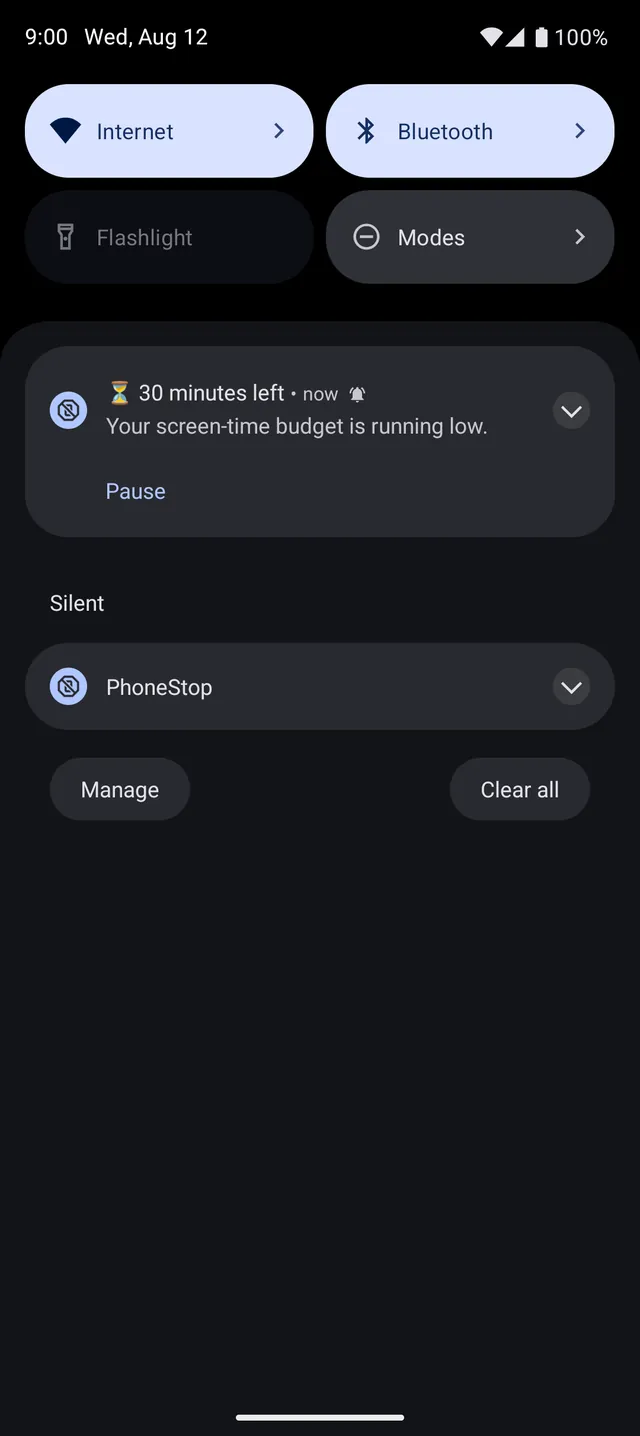
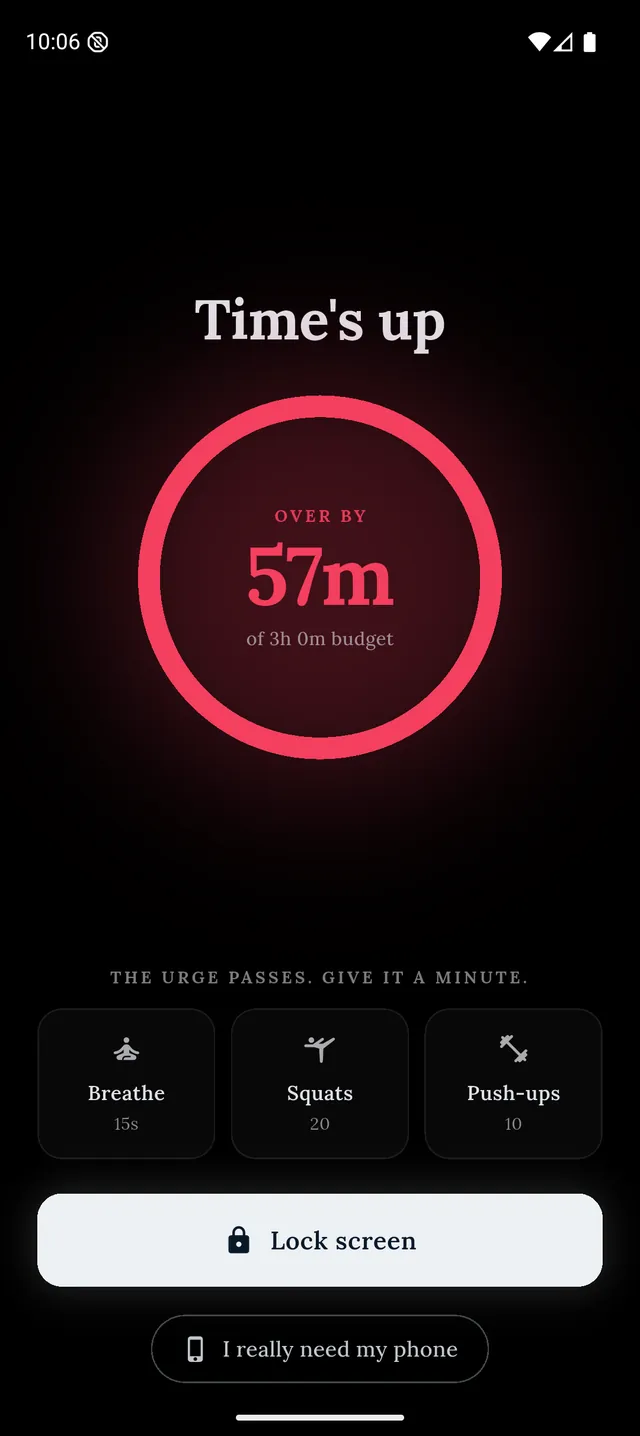
PhoneStop needs no object. It gives the whole phone a daily budget that counts down wherever you are, warns you before it runs out, and puts a full-screen stop in front of you when it does, with a one-tap way to sit the urge out. It is free on Android, iPhone coming, and there is nothing to remember to carry.
Disclosure: we make PhoneStop, so treat our own entry with the scepticism it deserves. Everything else here is written from public information and hands-on use; prices and platforms were checked in September 2026 and change often, so check the vendor before you pay.
PhoneStop is a free Android app. Set a daily screen time budget, get warned before it runs out, and get stopped when it does.

Android. No account, no ads, no data leaves your phone. An iPhone version is coming soon.
Questions people ask
Is Brick or Unpluq cheaper?
Brick, over any period longer than the first year: it is $59 once with no subscription. Unpluq costs around $79 up front and then roughly $35 a year.
Do both work on Android and iPhone?
Yes. Both need reasonably recent OS versions, because they rely on the platform's blocking APIs plus the physical tag.
What happens if I lose the tag or puck?
You are locked out of your blocked apps until you get it back or reset it, which is the point, and also the risk. A budget-based tool like PhoneStop has nothing to lose.
Is a physical blocker better than an app?
It is harder to defeat in the moment, but only if you actually keep it away from you. If you carry it, it is no stronger than a tap.