Locked (NowLocked) vs Brick
Locked and Brick are almost the same product: a physical tag you tap to unlock your apps. The real gap between them is price, shipping and which phone you carry.
By Ruslan Shchuchkin, who built PhoneStop · · Read this page as Markdown
The short version
Choose Locked if you are on iPhone and want to pay less. It does what Brick does, for a lower one-time price, with free worldwide shipping. For an iPhone user the saving is the whole argument.
Choose Brick if you are on Android, or want the original. Brick works on both platforms and has the longer track record; Locked is iPhone-only.
They are close enough that, on iPhone, this comes down to price and shipping rather than the experience.
| Locked (NowLocked) | Brick | |
|---|---|---|
| Platforms | iPhone, plus a physical tag | iPhone and Android (needs recent OS versions) |
| Price | A one-time purchase, priced below Brick, with free worldwide shipping | $59 one-time for the puck; the app is free |
| What it does when you hit the limit | Your blocked apps open only when you tap the physical Locked tag | Your chosen apps are gone until you physically tap the phone on the puck |
| Warns you before the limit | No | No |
| How it enforces | A passive NFC tag plus Apple's Screen Time API | A passive NFC tag plus the OS blocking APIs |
| Blocks individual apps | Yes | Yes — the apps disappear entirely while you are bricked |
| Account needed | The app; no cloud account stated | Yes |
| Data leaves the device | Not stated | Account |
| Google Play rating | Not on Google Play | 4.9 stars (4.15K) |
How each one stops you
Both are the same design: a passive tag plus the operating system's blocking. Your chosen apps stay gone until you physically tap the tag, which you are meant to keep out of easy reach. Locked runs on iPhone through Apple's Screen Time API; Brick runs on iPhone and Android. Neither keeps a running total of your time, and neither warns you as a day fills up, because that is not what a tap-to-lock tag does.
Where Locked (NowLocked) wins
- Cheaper, a lower one-time price than Brick.
- Free worldwide shipping, with no surprise import fees.
- The same tap-to-unlock behaviour as Brick.
Where Brick wins
- iPhone and Android, where Locked is iPhone-only.
- The longer track record and larger community.
- A single, well-known product with wide support.
Shopping for the cheaper tag is not the same as changing the habit
When two products are this alike, the comparison quietly becomes a price check, and a price check is not the decision that matters. Whether a tag works for you depends on the room you leave it in and the day you forget it, not on which one shipped cheaper. And whichever you pick, the phone is still open for everything you did not lock, and neither tag can tell you how long you were on it.
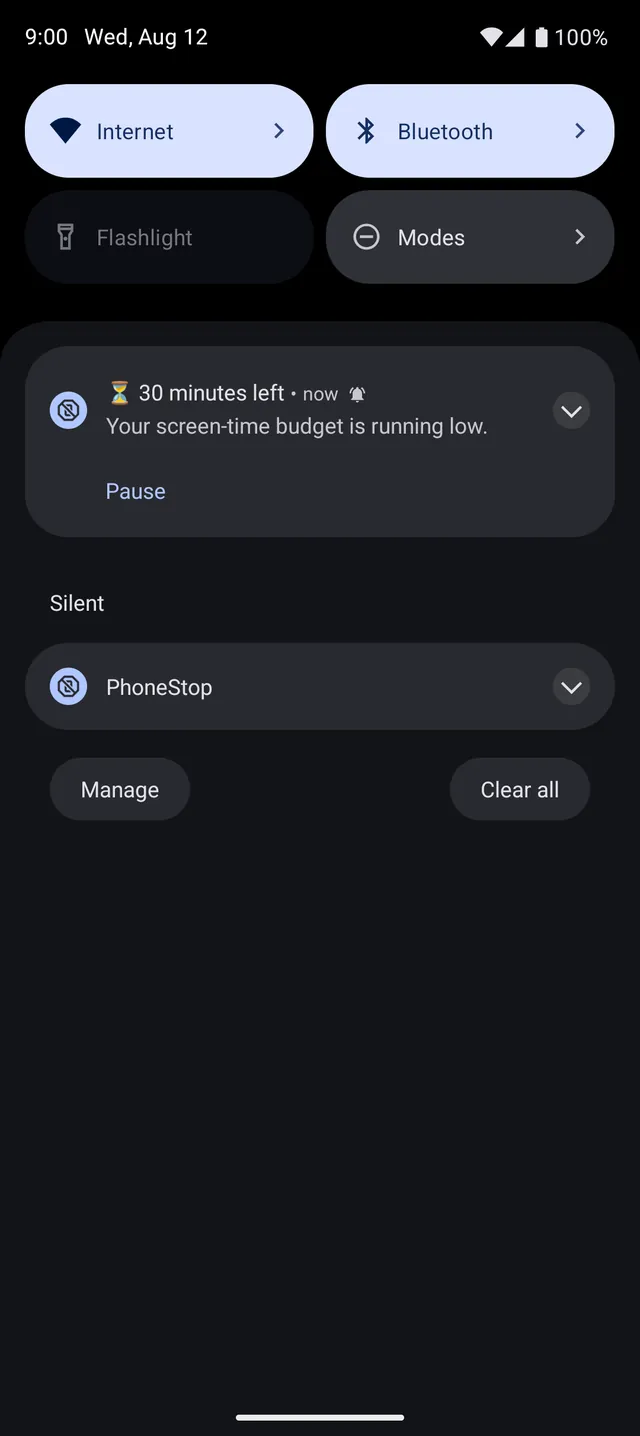
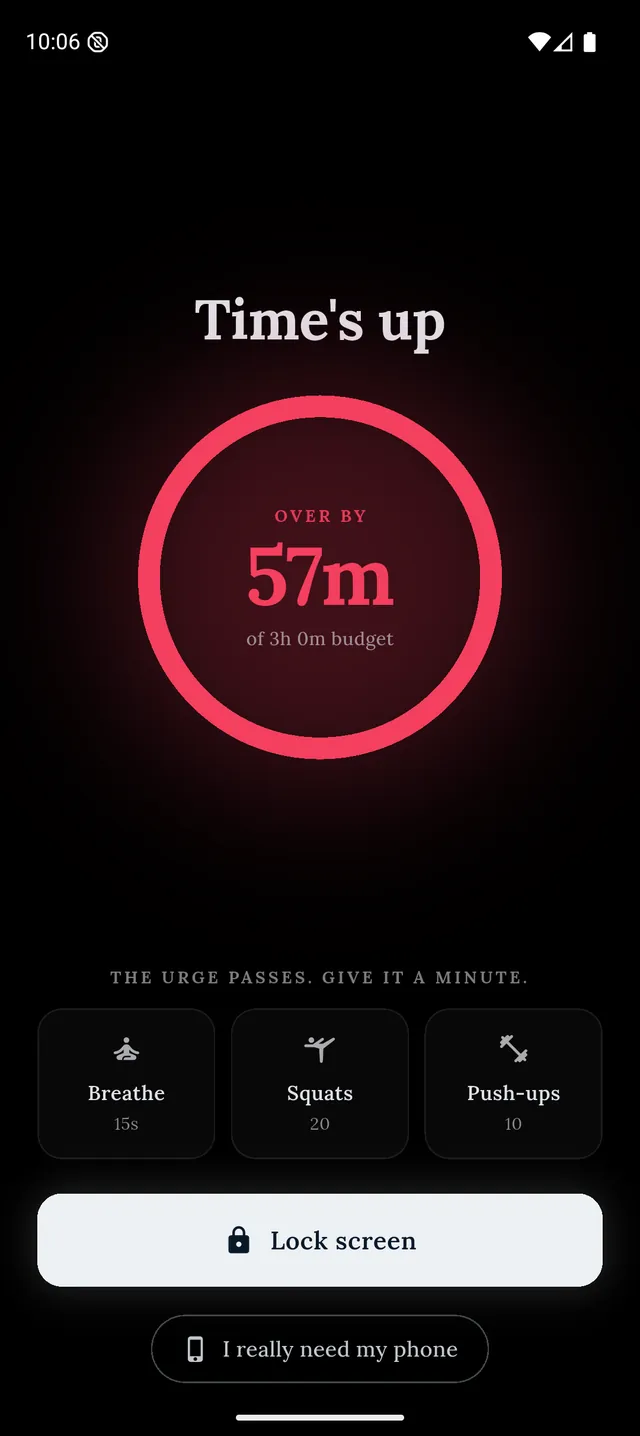
PhoneStop measures the thing the tags cannot: the total. One budget for the whole phone, counting down as you use any app, with a stop when it runs out and no object to buy, carry or forget. Free on Android, iPhone coming. The cheaper tag saves you money; a budget changes what you are actually watching.
Disclosure: we make PhoneStop, so treat our own entry with the scepticism it deserves. Everything else here is written from public information and hands-on use; prices and platforms were checked in September 2026 and change often, so check the vendor before you pay.
PhoneStop is a free Android app. Set a daily screen time budget, get warned before it runs out, and get stopped when it does.

Android. No account, no ads, no data leaves your phone. An iPhone version is coming soon.
Questions people ask
Is Locked (NowLocked) better than Brick?
On iPhone it does the same job for less, with free shipping. Brick's advantages are Android support and a longer track record. If you are on iPhone and price matters, Locked is the value pick.
Does Locked work on Android?
No, it is iPhone-only. Brick works on both. On Android, PhoneStop is a free, no-hardware way to cap the whole phone.
Do either track my screen time?
No. Both are tap-to-unlock tags that block chosen apps; neither keeps a daily total. That is what PhoneStop budgets instead.