Opal vs Freedom
The polished iPhone focus app against the veteran cross-device blocker. Both subscriptions, and they are not competing for the same person.
By Ruslan Shchuchkin, who built PhoneStop · · Read this page as Markdown
The short version
Choose Opal if the phone is the problem and you are on an iPhone. It is the better-designed product by some distance, Deep Focus is a serious block, and the whole experience is built around the device where the hours actually go.
Choose Freedom if the problem is spread across a laptop, a phone and a browser. One session covers all of them, which Opal does not attempt. Freedom is also the more mature product in the boring sense: it has been running since 2011 and it does not surprise you.
If you only have an iPhone and no real desktop problem, Freedom is paying for sync you will never use. If you have a work laptop and a personal phone and lose time on both, Opal solves half your problem beautifully.
| Opal | Freedom | |
|---|---|---|
| Platforms | iPhone and iPad (an Android build exists but trails the iOS app) | iPhone, iPad, Android, Mac, Windows, Chrome |
| Price | Free tier, subscription for the real features (around $100/year) | Subscription, with a lifetime option (around $100) |
| What it does when you hit the limit | Blocks the apps in your session; Deep Focus makes the block hard to lift | Blocks the sites and apps on your list for the scheduled session |
| Warns you before the limit | Session reminders, not a whole-day countdown | Session start and end notices |
| How it enforces | Apple's Screen Time API | A local VPN profile to filter traffic, plus app blocking |
| Blocks individual apps | Yes: per app, per website, per category | Yes: apps and websites, across your devices at once |
| Account needed | Yes | Yes |
| Data leaves the device | Yes: account and cloud sync | Yes: account and cross-device sync |
| Google Play rating | 4.5 stars (8.77K) | 4.5 stars (8.1K) |
How each one stops you
Opal is an iPhone product built on Apple's Screen Time API. Sessions, schedules, focus scores, gems, and Deep Focus as the paid escalation that makes a block genuinely hard to lift. Its Android build exists but has never matched the iOS app, so on Android you are not getting the product the reviews describe.
Freedom is a cross-device blocklist with an account at the centre. You define what to block, you start a session, and it applies on every device you are signed into: Mac, Windows, iOS, Android and the browser extension. Locked Mode is its version of Deep Focus.
Both are lists. The difference is how many screens the list reaches, and how hard it is to argue with once it is running.
Where Opal wins
- The better product on an iPhone, and it is not particularly close on design.
- Deep Focus is harder to defeat in the moment than Locked Mode.
- Built for the phone first, where most people's screen time actually is.
- Per-app, per-website and per-category blocking with real precision.
- The onboarding and charts are the best in the category.
Where Freedom wins
- It covers the desktop, which Opal effectively does not.
- One session across every device, from one place.
- A browser extension, so it reaches the websites that phone-first tools miss.
- A mature Android app, rather than a build that trails the iOS one.
- Longer track record, and pricing that includes a one-time forever option.
Both need you to know which apps are the problem
Opal and Freedom disagree about how many devices to cover, and agree completely about the method: you name the apps in advance, and the tool enforces the list.
That method has a failure mode that neither can fix, and it is not subtle. Block Instagram and you open TikTok. Block both and you open the browser. Block the browser and you find the news app, or a game, or your email, or a shopping app you had not opened in a month. The hour does not disappear when you block where it was going. It moves. A blocklist can only ever contain the apps you already suspect, which means the time reliably lands somewhere that is not on it.
This is why people who have been blocking apps for a year still report the same screen time they started with. They never had an Instagram problem. They had a screen time problem, and Instagram was where it happened to land that month. We wrote the long version of this argument here.
PhoneStop keeps no list at all. One budget for the entire phone, every app spending from the same number, warnings on the way down, and a full-screen stop at zero, so there is nowhere for the hour to move to. Free, Android, no account.
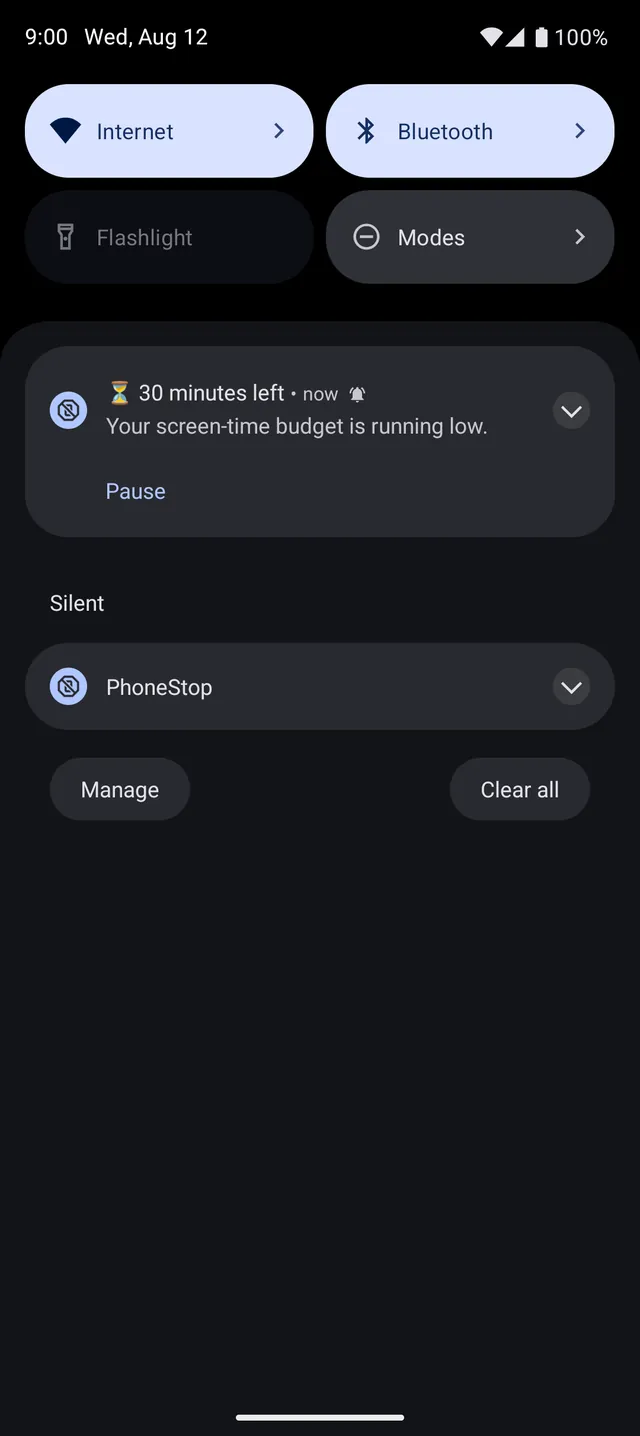
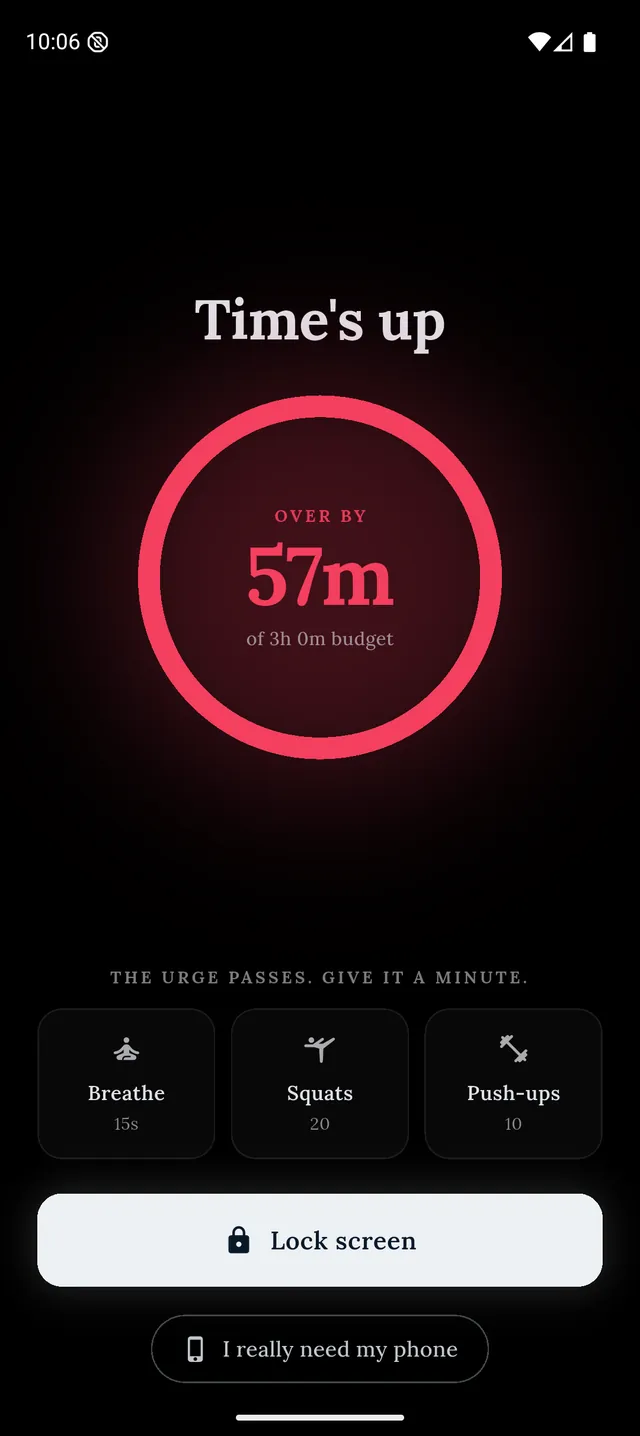
Disclosure: we make PhoneStop, so treat our own entry with the scepticism it deserves. Everything else here is written from public information and hands-on use; prices and platforms were checked in September 2026 and change often, so check the vendor before you pay.
PhoneStop is a free Android app. Set a daily screen time budget, get warned before it runs out, and get stopped when it does.
Android. No account, no ads. Your screen time never leaves your phone. An iPhone version is coming soon.
Questions people ask
Is Opal or Freedom better?
Opal on an iPhone, Freedom if you need the laptop covered too. Opal is the better-designed app; Freedom is the broader one. Neither is better in the abstract.
Does Opal work on Android?
An Android build exists but it has never matched the iOS app, which is what every review describes. On Android, Freedom's app is the more complete of the two.
Is Freedom or Opal cheaper?
Freedom is generally cheaper per year and offers a one-time forever plan, which Opal does not. Opal's full feature set lands near $100 a year on some plans.
Can I block websites with Opal?
Yes, Opal blocks websites as well as apps. Freedom goes further on the desktop through its browser extension, which is the part phone-first tools cannot reach.