Opal vs Apple Screen Time
Opal is built on the same Apple API that powers the Screen Time you already have. The real question is what the subscription buys on top of free.
By Ruslan Shchuchkin, who built PhoneStop · · Read this page as Markdown
The short version
Use Apple Screen Time first, because you already have it. It is free, built in, and genuinely capable: app limits, categories and Downtime, with a five-minute warning.
Pay for Opal if the built-in block is too easy to ignore. Its one weakness is the "Ignore Limit For Today" tap; Opal's Deep Focus closes exactly that gap, which is most of what the subscription buys.
Try the free one honestly for a week. Upgrade only if you keep tapping Ignore.
| Opal | Apple Screen Time | |
|---|---|---|
| Platforms | iPhone and iPad (an Android build exists but trails the iOS app) | iPhone, iPad, Mac (built in) |
| Price | Free tier, subscription for the real features (around $100/year) | Free |
| What it does when you hit the limit | Blocks the apps in your session; Deep Focus makes the block hard to lift | A block screen offering one more minute, fifteen minutes, or Ignore Limit For Today |
| Warns you before the limit | Session reminders, not a whole-day countdown | A five-minute warning |
| How it enforces | Apple's Screen Time API | Part of the operating system |
| Blocks individual apps | Yes — per app, per website, per category | App limits, categories and Downtime |
| Account needed | Yes | Apple Account |
| Data leaves the device | Yes — account and cloud sync | Apple Account |
| Google Play rating | 4.5 stars (8.77K) | Not on Google Play |
How each one stops you
Apple Screen Time is part of iOS. It enforces app limits, category limits and Downtime, warns you five minutes out, and then shows a block screen that offers one more minute, fifteen more, or Ignore Limit For Today. That last option is the whole weakness.
Opal is built on the same Screen Time API, then adds the discipline Apple leaves out: sessions you cannot casually dismiss, Deep Focus, schedules and routines. It is the built-in feature with the easy exit removed, for a subscription near $100 a year.
Where Opal wins
- A block you cannot wave away with Ignore For Today.
- Deep Focus for genuine hard-focus time.
- Cleaner scheduling and routines.
- A more motivating interface than the Settings screen.
Where Apple Screen Time wins
- Free and already installed.
- No account beyond the Apple one you have.
- Fully capable: limits, categories, Downtime.
- Nothing new to trust with your data.
You already own a blocker, the missing piece is not another one
Opal exists because Apple's built-in block is one tap from being ignored. That is real, but notice what it means: you already own a capable blocker, and the upgrade you are considering only makes the same blocklist harder to dismiss. It does not change the model, which still asks which apps to limit and still leaves the rest open.
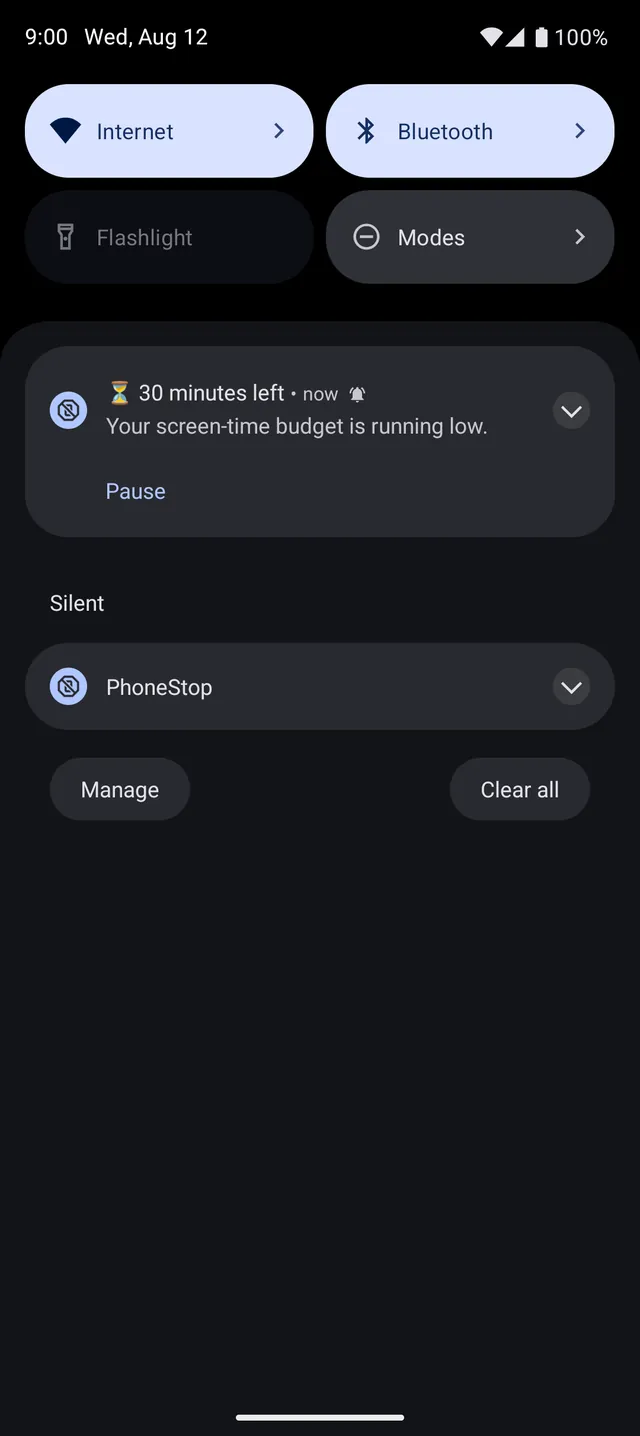
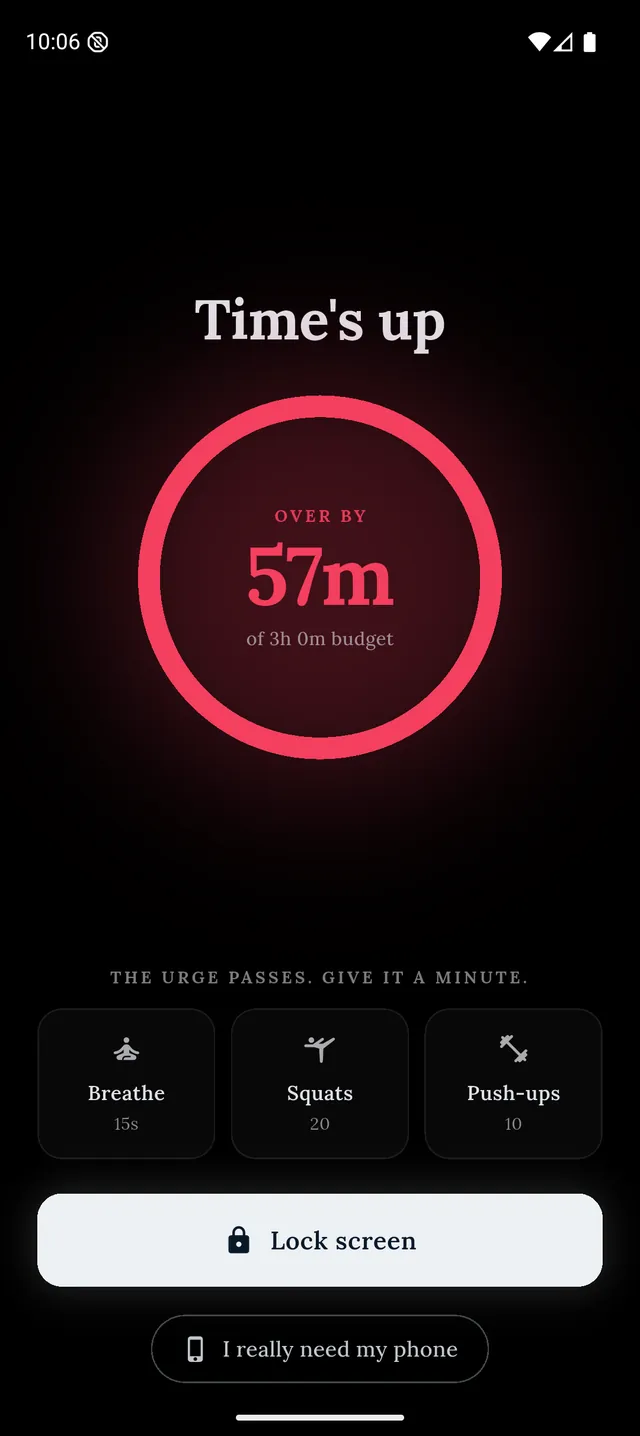
PhoneStop changes the model. Instead of limiting chosen apps, it budgets the whole phone for the day, warns you as the total runs down, and puts a full-screen stop in front of you when it is gone, one you sit out rather than tap away. It is free, and the iPhone version is coming. The point is not a harder block; it is a number for the whole day.
Disclosure: we make PhoneStop, so treat our own entry with the scepticism it deserves. Everything else here is written from public information and hands-on use; prices and platforms were checked in September 2026 and change often, so check the vendor before you pay.
PhoneStop is a free Android app. Set a daily screen time budget, get warned before it runs out, and get stopped when it does.

Android. No account, no ads, no data leaves your phone. An iPhone version is coming soon.
Questions people ask
Is Opal better than Apple Screen Time?
Only in one way that matters: it removes the easy 'Ignore Limit For Today' escape. If that tap is your problem, Opal helps; if not, the free built-in does the same job.
Is Apple Screen Time enough?
For many people, yes, app limits and Downtime are capable. Its weakness is how easily you can ignore a limit, which is what paid apps like Opal exist to fix.
What if I want a whole-phone limit, not per-app?
Neither does that, both limit chosen apps and categories. A single daily budget for the entire phone is what PhoneStop is built around.